
6 products

Fortec Dental Instruments • Standard Screening Probes

Standard Screening Probes – Accurate, Reliable & Clinically Proven Periodontal Tools

At Fortec International, our Standard Screening Probes are built to meet the demanding needs of daily dental practice. Designed to measure periodontal pocket depths with precision and confidence, each probe helps dentists detect early signs of gum disease and establish the true state of periodontal health. Made from North American and European standard stainless steel, hand-finished and individually tested — these instruments are CE, ISO 9001, ISO 13485, and FDA certified, trusted by dental professionals across Canada.

Why Choose Fortec Standard Screening Probes

A standard screening probe is not just a dental tool — it is an extension of your clinical expertise. Fortec probes are engineered to detect early signs of periodontal disease with accuracy, transmit tactile sensitivity directly to your fingertips, and remain comfortable throughout every examination.

  • Superior strength and rigidity that resists bending and breaking even under repeated use and autoclave sterilization.
  • Optimised tactile sensitivity — fine, rigid tip transmits feel of even the smallest deposits and tissue variations.
  • Clear, lasting measurement markings that remain visible and accurate after many sterilization cycles.
  • Fully autoclavable and reusable without any loss of shape, calibration, or surface finish.
  • Individually packed to maintain hygiene and quality from warehouse to clinic.

Equip Your Practice with Probes You Can Trust

Your diagnostic confidence begins with the quality of your instruments. Choose Fortec Standard Screening Probes — clinically proven, precisely calibrated, and built to last — trusted by dental professionals who demand accuracy and reliability in every periodontal examination.

FAQ – Standard Screening Probes | Fortec Canada

Frequently Asked Questions

Everything you need to know about Fortec's standard screening probes — models, markings, clinical uses, differences, and care.

Fortec carries 5 standard screening probe models in its Diagnostic collection:

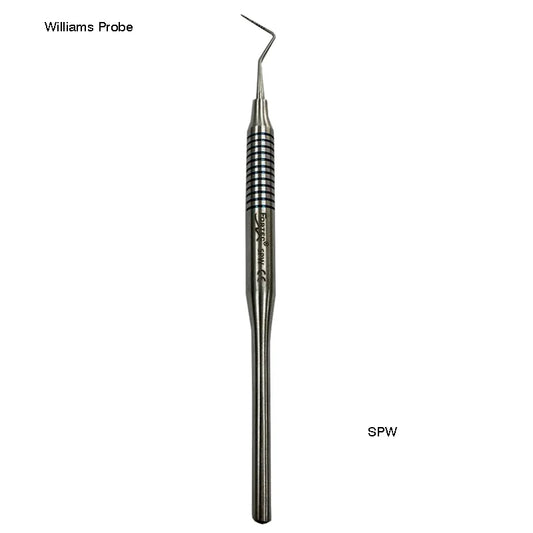
Williams Probe — $13.50
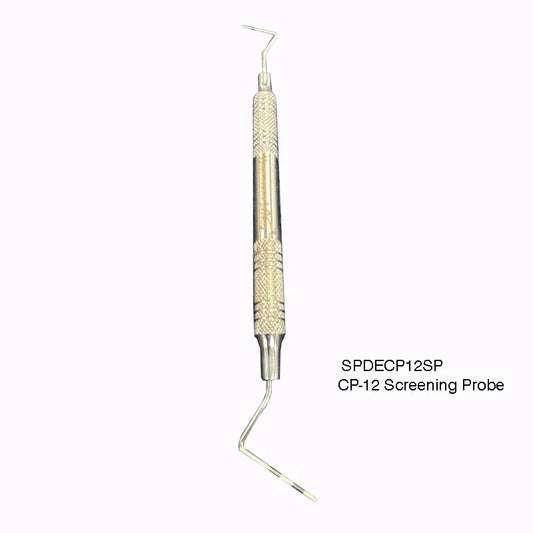
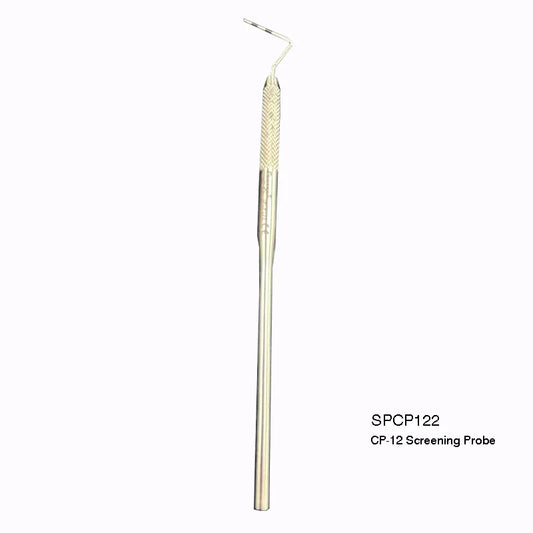
CP-12 Screening Probe — $11.50
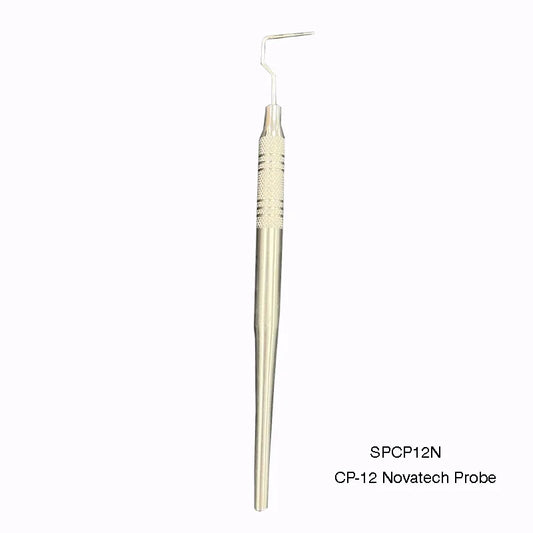
CP-12 Novatech Probe — $12.65
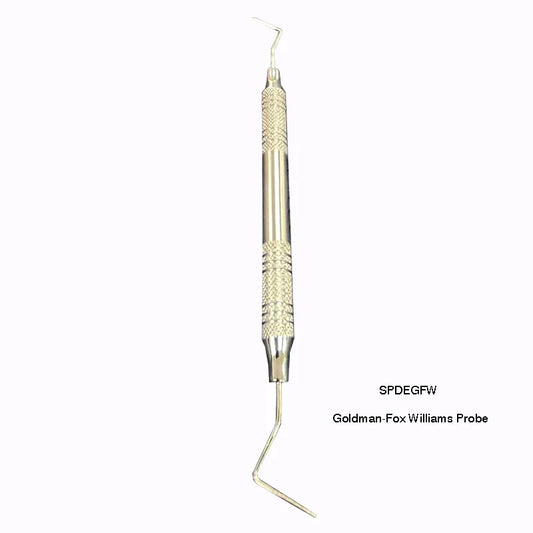
Goldman-Fox Williams Probe — $12.65
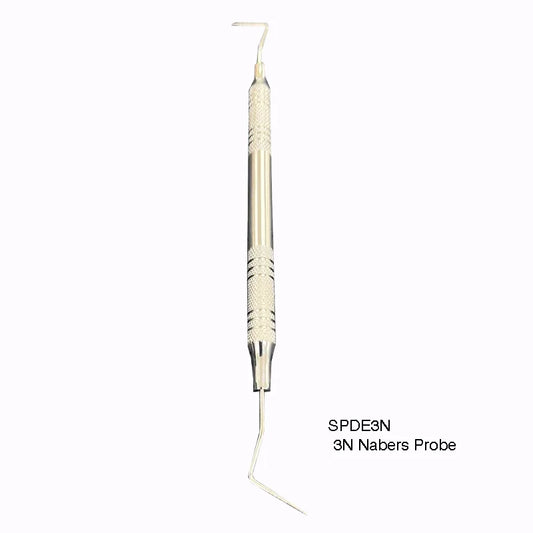
3N Nabers Probe — $12.65

All are manufactured from North American and European standard stainless steel, forged and hand-finished for precise tactile performance. Every model is in stock and available for immediate order across Canada.
A screening probe is a calibrated dental instrument used to measure periodontal pocket depths around each tooth in order to establish the state of health of the periodontium — the supporting structures of the tooth. The probe is gently inserted into the gingival sulcus or periodontal pocket and walked around the tooth at six points (mesio-buccal, mid-buccal, disto-buccal, mesio-lingual, mid-lingual, disto-lingual) to record the depth of each pocket in millimetres. Clinicians use these measurements to diagnose gingivitis, early or advanced periodontitis, attachment loss, and recession. Fortec probes are engineered with an optimised rigid and fine design that transmits critical tactile information directly from tip to fingers, allowing detection of even tiny calculus deposits and tissue variations with accuracy and confidence.
The Williams Probe ($13.50) is the most widely used and universally recognised periodontal probe in North America. It features the classic Williams markings at 1, 2, 3, 5, 7, 8, 9, and 10 mm, with colour-coded bands at the 3–5 mm and 8–10 mm zones for rapid visual reading during examination. This single-ended design is purpose-built to measure periodontal pocket depths and assess the state of the periodontium around each tooth. Its iconic millimetre markings have been the North American clinical standard for decades, making the Williams Probe the instrument of choice for general dentists, periodontists, and dental hygienists who need consistent, reproducible pocket depth recordings across their entire patient base. Fortec's version is crafted from premium stainless steel with permanent laser etching to ensure markings remain legible even after many sterilization cycles.
The CP-12 Screening Probe ($11.50) is the most affordable model in the Fortec probe range, making it the go-to choice for high-volume practices, dental schools, and tray set-ups where cost-per-instrument matters. It uses the CP-12 marking system — typically graduated at 3, 6, 9, and 12 mm — a straightforward colour-coded pattern designed for rapid community periodontal index (CPI) screening, Basic Periodontal Examination (BPE), and routine pocket depth charting. Choose the CP-12 over the Williams Probe when your practice protocol uses CPI/BPE scoring rather than full six-point Williams-style charting, or when you want to stock screening probes in bulk without compromising on stainless steel quality or autoclave compatibility.
The CP-12 Novatech Probe ($12.65) shares the same CP-12 millimetre graduation system as the standard model but is produced to the Novatech specification — a refined manufacturing standard that applies to the handle geometry, balance, and finish of the instrument. The Novatech designation indicates a handle design engineered for a more ergonomic grip, reducing clinician fatigue during extended charting sessions. At $12.65 it sits between the entry-level CP-12 ($11.50) and the Williams Probe ($13.50), offering practices the familiar CP-12 marking system with enhanced comfort and a slightly more premium build quality. It is an ideal upgrade for hygienists who use screening probes intensively throughout the day.
The Goldman-Fox Williams Probe ($12.65) combines the Williams millimetre marking system (1–2–3–5–7–8–9–10 mm) with the Goldman-Fox handle design — a broader, flat-sided handle originally developed by Dr. Saul Goldman and Dr. Irwin Fox to provide a more stable, controlled grip during periodontal examination. While the standard Williams Probe uses a round tapered handle, the Goldman-Fox version offers better rotational control and reduced slippage, which many periodontists and hygienists prefer for precise subgingival insertion. Both probes deliver the same Williams depth readings; the difference is entirely in the handle ergonomics. At $12.65 it is slightly more affordable than the standard Williams Probe ($13.50), making it an excellent alternative for clinicians who favour the Goldman-Fox grip.
The 3N Nabers Probe ($12.65) is a specialised furcation probe with a curved, ball-ended tip designed specifically for detecting and classifying furcation involvement in multi-rooted teeth — the degree to which periodontal disease has progressed into the space between the roots of molars and premolars. Unlike straight periodontal probes, the Nabers probe's curved working end allows it to follow root trunk contours and enter furcation entrances that a conventional probe cannot access. Furcation classification (Class I, II, or III) is a critical element of periodontal staging and grading that directly influences treatment planning, prognosis, and decisions about tooth retention. The 3N designation refers to its specific curvature and shank length. The Nabers probe is an essential addition to any periodontal diagnostic tray alongside a standard Williams or CP-12 probe.
Standard screening probes are single-purpose instruments — the working tip is a calibrated probe only, used exclusively for measuring periodontal pocket depths and recording pocket charts. Expros (available separately at $12.65 each, e.g. 23/CP-8, 23/QW Williams, 23/0 Michigan, 6/Williams) are hybrid double-ended instruments that carry an explorer tip on one end and a probe tip on the other, allowing the clinician to both detect calculus/caries and measure pocket depths without switching instruments during a single pass. Choose standard screening probes when your clinical workflow separates the probing appointment from caries detection, or when multiple clinicians share instruments and you want dedicated probing instruments in each tray. Choose Expros when efficiency and reduced instrument count per tray are the priority.
All Fortec standard screening probes are manufactured from North American and European standard stainless steel — forged, constructed with advanced techniques, and hand-finished for quality craftsmanship. This premium steel grade delivers superior strength, exceptional corrosion resistance, and structural integrity through repeated autoclave sterilization cycles. Crucially, Fortec probes feature permanent laser-etched millimetre markings that remain clear and legible even after extensive sterilization, ensuring accurate pocket depth readings examination after examination — unlike colour-coded probes where painted markings can fade or chip over time. All models are fully conformed to CE, ISO 9001, ISO 13485, and FDA standards and carry a warranty against defects in material and workmanship.
Yes — Fortec offers free Canada-wide shipping on all orders over $195 before taxes, shipping from their warehouse at 1011 Hualtain Court, Unit 14, Mississauga, Ontario, L4W 1W1. Screening probe prices range from $11.50 to $13.50, so most practices reach the free shipping threshold by combining probes with other instruments from Fortec's Diagnostic range — such as explorers ($9.35–$18.69), Expros ($12.65), mirror handles ($4.50), or dressing pliers ($12.50–$15.99). All probes are in stock and available for immediate order at fortec.ca. Fortec's customer care team is available Monday to Friday, 8:00 AM – 4:00 PM at 1-855-790-7779 or at info@fortec.ca for order assistance. Full details are on the Shipping Policy page.
Shopping cart

Your cart is empty.

Return to shop
close